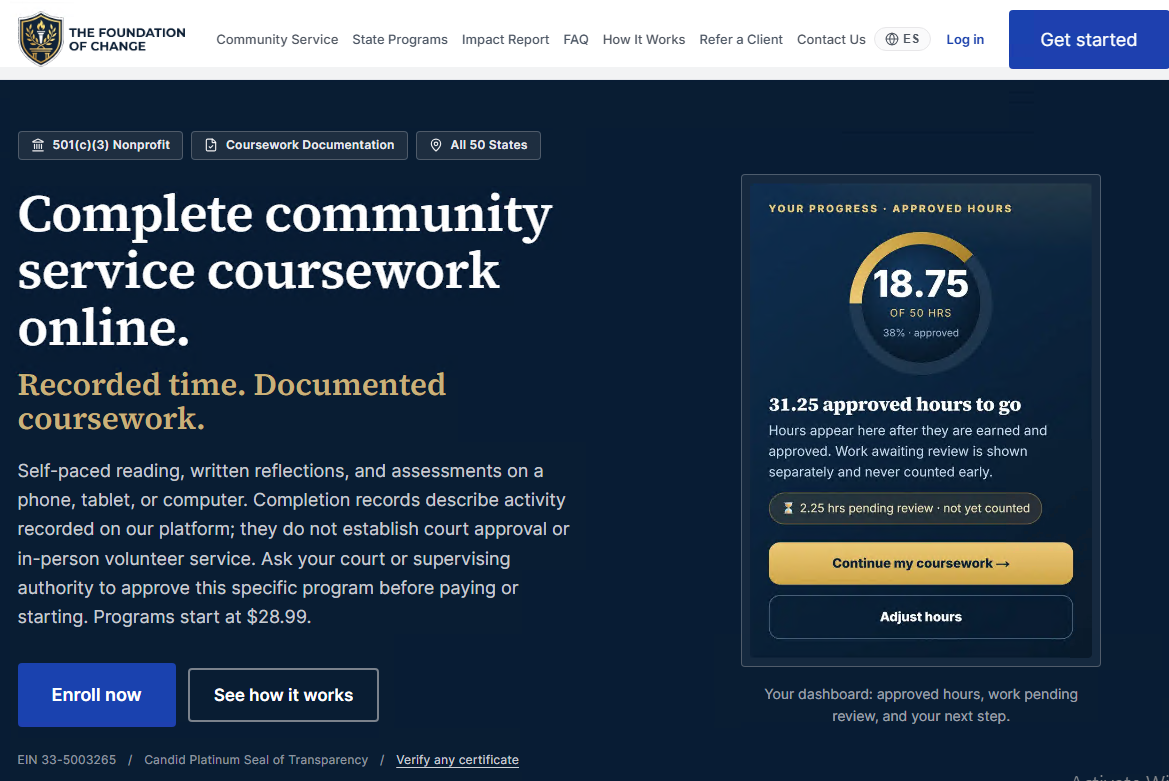
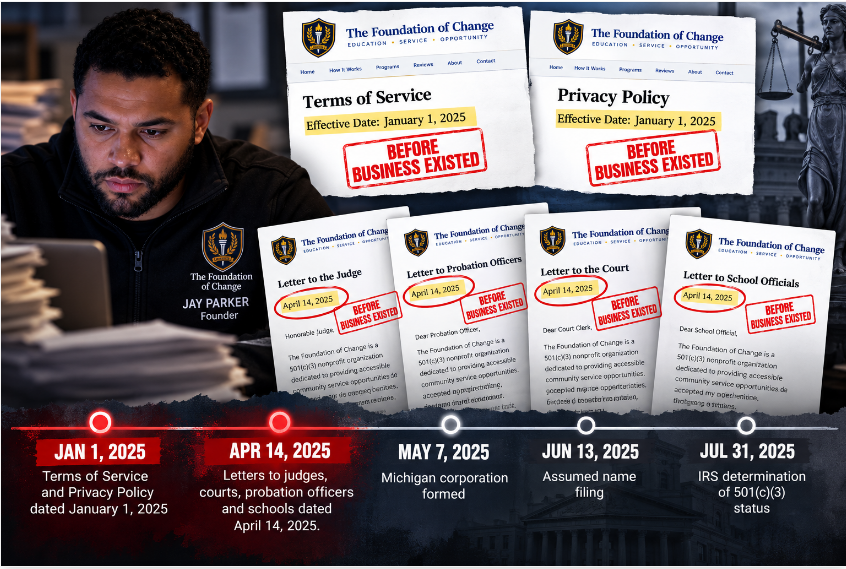
 The Foundation of Change has a chronology problem that cannot be explained by a typo on a single document.
Its Terms of Service say they became effective January 1, 2025.
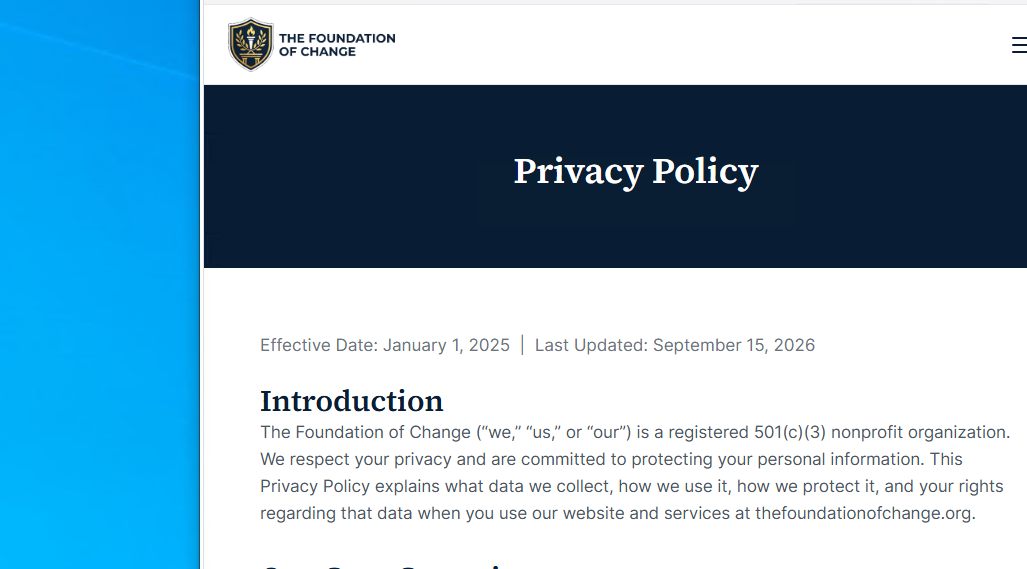
Its Privacy Policy also says it became effective January 1, 2025.
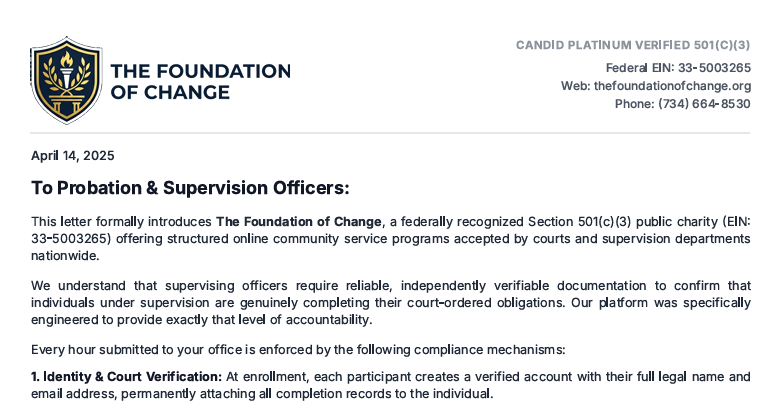
And a collection of official-looking letters directed to judges, courts, probation officers and schools bears the date April 14, 2025.
There is one fundamental problem with all of those dates: The corporation had not yet been formed.
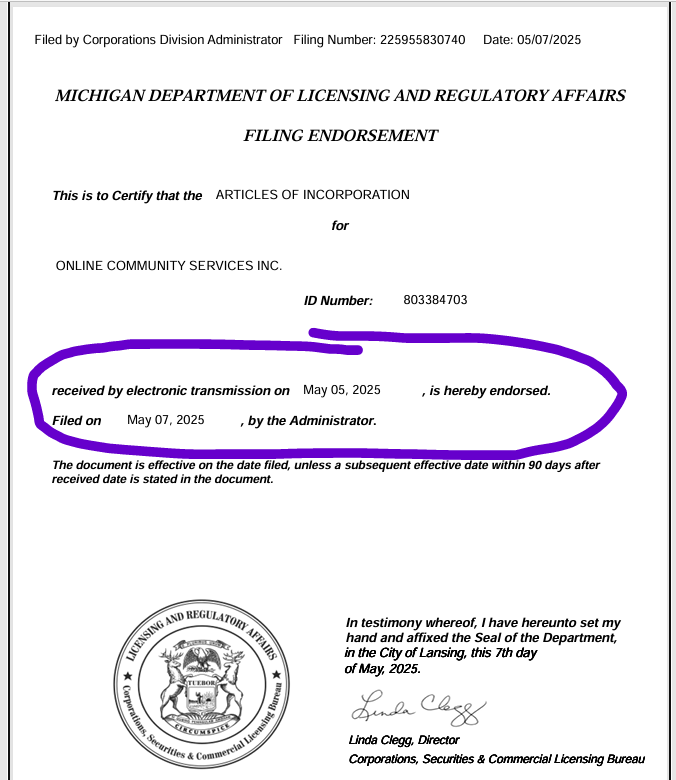
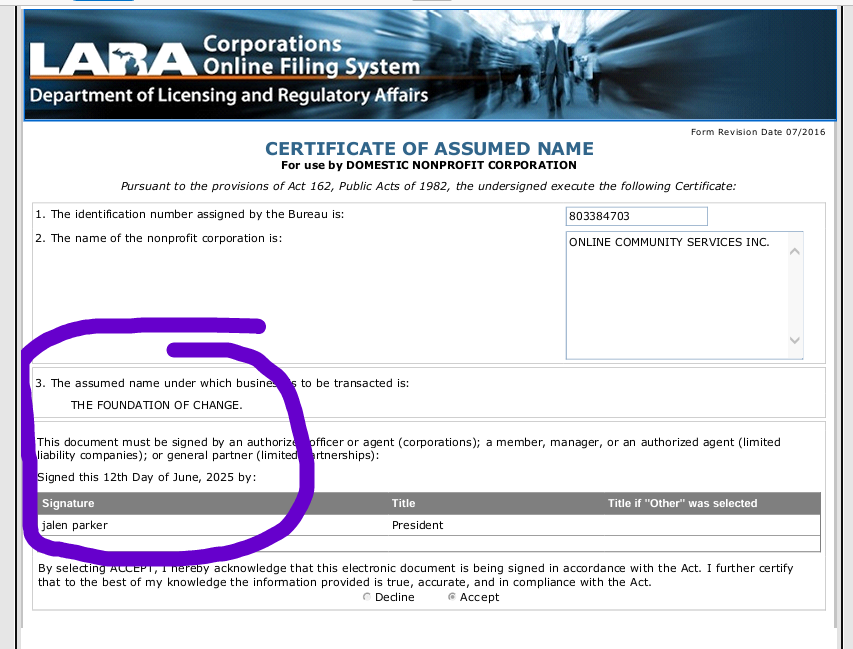
Corporate records reviewed in connection with a regulatory complaint identify May 7, 2025 as the date the Michigan corporation was formed. Its assumed-name filing followed on June 13. Its IRS determination recognizing federal tax-exempt status was not issued until July 31.
Yet documents now presented by the Foundation create the appearance that its policies and institutional materials were already in place months—or weeks—before the organization legally existed.
And preserved earlier versions of the Foundation's materials raise an even more consequential question: Were later documents given earlier dates after the organization was already operating?
A January 1 Policy for a Corporation Formed in May
The clearest discrepancy remains visible on the Foundation's website today.
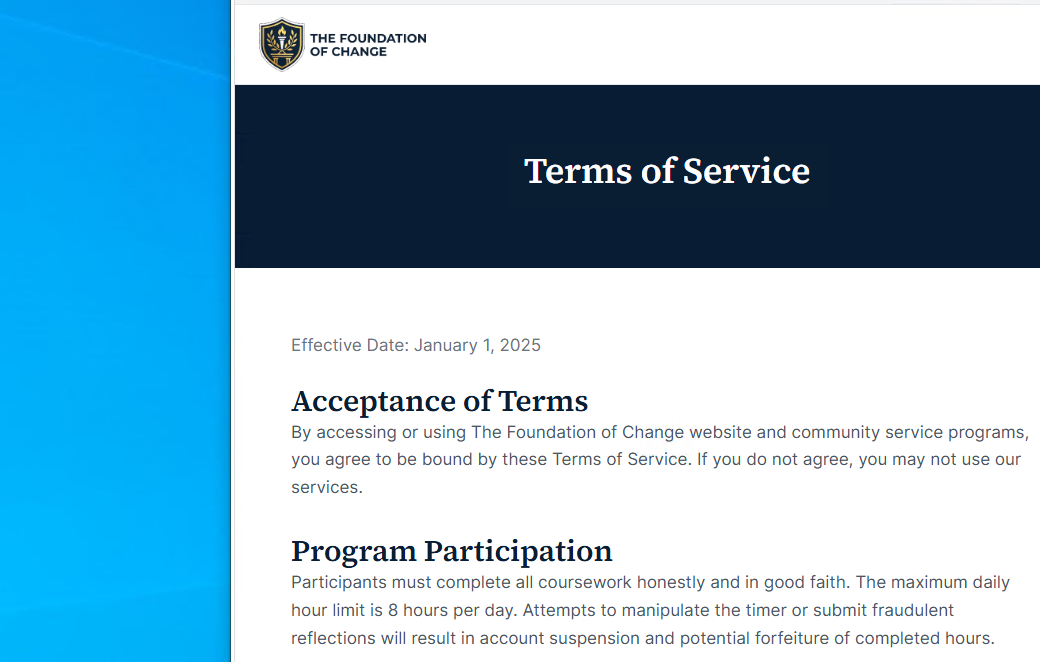
Its Terms of Service state:
“Effective Date: January 1, 2025”
The Foundation's current live Terms page continues to display that date.
Its Privacy Policy does the same, identifying January 1, 2025 as its effective date while separately identifying a much later “Last Updated” date.
January 1 was more than four months before the corporation's May 7 formation.
That does not merely mean the organization updated an old policy.
The date presented to visitors purports to tell them when the policy became effective.
According to the corporate chronology preserved in the investigative records, there was no Michigan corporation called Online Community Services Inc.—the corporation operating under The Foundation of Change name—on January 1. The regulatory complaint specifically identifies that discrepancy and says the January date predates the corporation's existence by more than four months.
Then There Are the April 14 Letters
The dating issue extends beyond website boilerplate.
The Foundation created formal materials intended for institutions that might be asked to rely on its community-service documentation.
Those materials include letters to:
- judges;
- courts;
- probation officers; and
- school officials.
Later versions of those letters bear the date April 14, 2025.
Again, that is before the May 7 incorporation.
But the chronology becomes considerably more significant because preserved records show that different versions of these documents existed.
The investigative materials identify an earlier Judge Letter of Introduction naming Jennifer Schroeder as Executive Director, an earlier probation introduction letter, earlier court-clerk materials and an earlier school introduction letter.
They separately identify later versions dated April 14, including a Letter to the Judge identifying Jalen Parker and containing more detailed anti-fraud claims, a Letter to Probation Officers, a Letter to the Court and a Letter to School Officials.
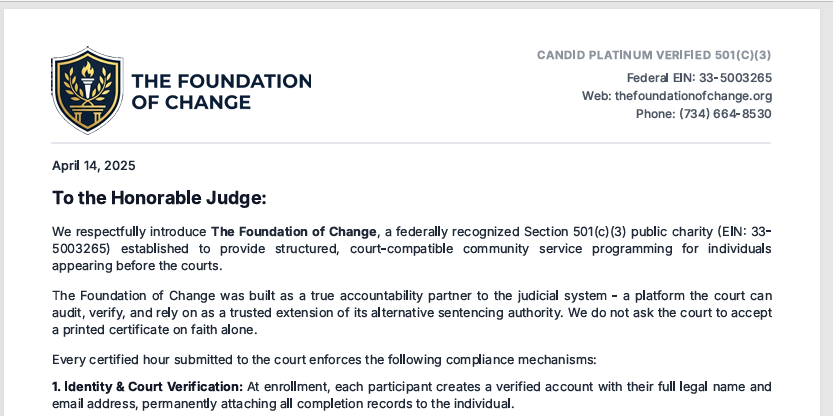
In other words, the question isn't merely how a newly formed organization happened to possess a document dated several weeks before incorporation.
There are earlier and later versions.
The Documents Changed. The Date Did Not Follow the Changes.
According to the preserved-document analysis, the later materials introduced substantive representations concerning the operation of the program.
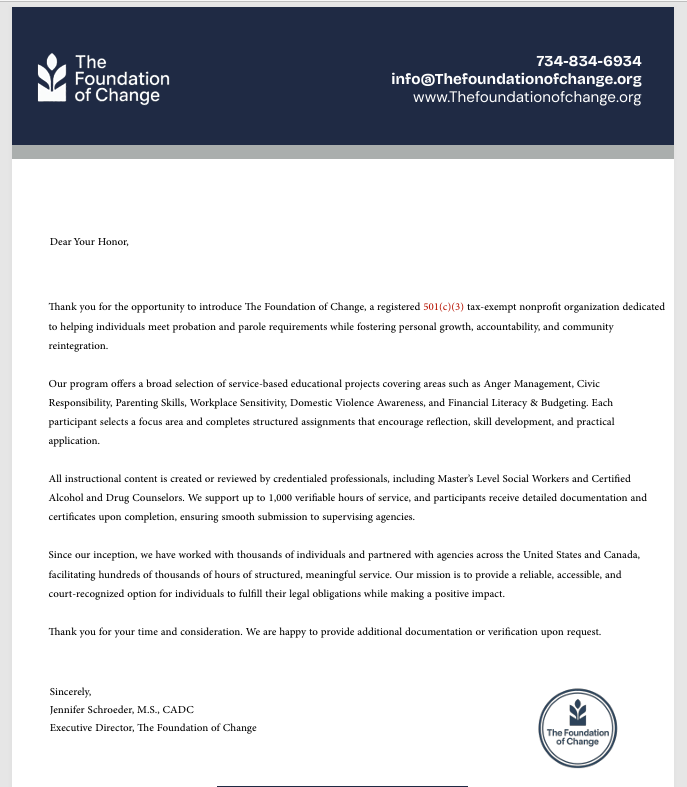
Those versions identify Parker in an executive role and describe safeguards including browser-focus monitoring, AFK controls, blocking simultaneous tabs, daily limits, time-locked assessments, server records and verification systems.
Yet those later versions carry the April 14, 2025 date.
The regulatory complaint therefore calls for the chronology to be tested against objective digital evidence—including PDF metadata, archived webpages, deployment records, server timestamps and source-control history.
That evidence could answer a relatively simple question:
When was each version actually created?
If a document genuinely existed on April 14, its underlying electronic history should be consistent with that.
If it was created or substantially rewritten months later but retained an April 14 date, that would tell a very different story.
One Statement Makes the April Date Particularly Difficult
Some of the later institutional materials reportedly go beyond describing program procedures.
According to the preserved records, later letters dated April 14 describe the Foundation as a federally recognized 501(c)(3) public charity.
The investigative chronology places the IRS determination on July 31, 2025 and effective May 7 2025.
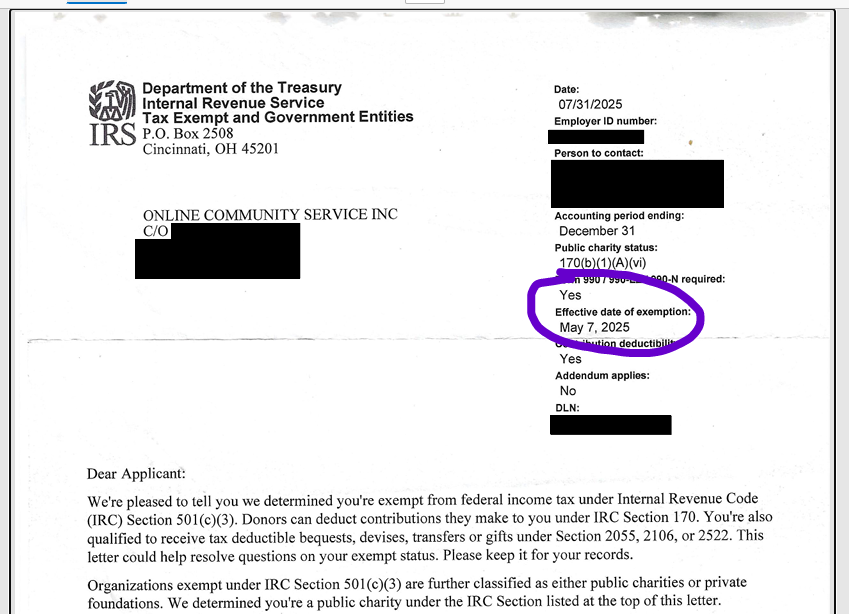
The complaint highlights the contradiction directly: a document genuinely issued April 14 could not at that time have described the corporation as a federally recognized §501(c)(3) public charity when the corporation itself had not yet been formed and the IRS determination had not yet been issued.
That is Fraud.
The document is effectively representing two historical facts simultaneously:
April 14, 2025: the date appearing on the letter.
Federal 501(c)(3) recognition: a status the preserved chronology says was not determined until July 31.
Those two facts require explanation.
Why the Dates Matter
An effective date on a privacy policy can tell users when an organization says particular data practices governed their information.
An effective date on Terms of Service can establish which contractual provisions the organization says applied to a transaction at a particular point in time.
And dates on letters supplied to judges, probation officers, schools and courts can create a historical record of what an organization says it was representing to institutions at that time.
Changing a document later is normal.
Organizations revise policies constantly.
What is different here is the evidence of materially different versions combined with dates that appear to place the newer representations earlier in the organization's history than the documented chronology permits.
The regulatory complaint describes the effect as creating a historical appearance that policies, safeguards and institutional representations were already in place.
Whether that was intentional is a separate question requiring evidence about authorship and document history.
But the date discrepancies themselves are observable.
The Foundation Still Uses the January 1 Date
This is not merely an artifact sitting inside an old investigative file.
As of September 2026, the Foundation's publicly accessible Terms of Service still says:
“Effective Date: January 1, 2025.”
Its live Privacy Policy likewise continues to identify January 1, 2025 as its effective date.
So the Foundation continues to publicly represent that these policies took effect months before the May incorporation date reflected in the records supplied for investigation.
Digital Records Can Settle the Question
Unlike disputes based entirely on someone's recollection, this chronology should be capable of objective verification.
Original PDF creation dates, modification dates, archived copies, hosting records, source-control commits and server backups could establish when the different court-facing letters were created and changed.
The same type of evidence could establish when the Terms of Service and Privacy Policy first appeared and what they said at different points in the organization's history.
That is why the existence of preserved earlier versions is particularly important.
An organization can put almost any date it wants at the top of a document.
It cannot as easily rewrite the independent digital history showing when that document actually came into existence.