“Verified” is one of the most important words in The Foundation of Change's online community-service program.
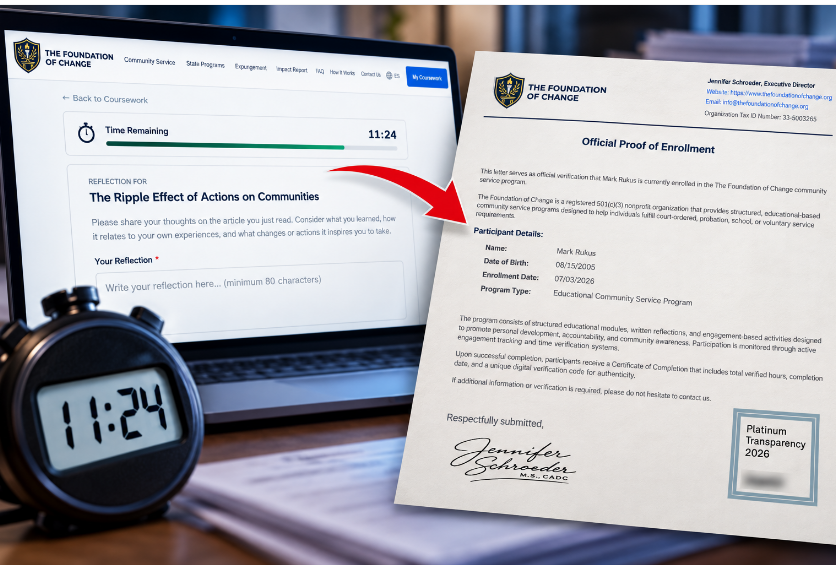
The organization doesn't simply tell participants that its website keeps track of time. Its materials describe a system of active-participation requirements, inactivity monitoring, written reflections and server-side records intended to ensure that community-service hours are genuinely earned.
Those assurances matter because the resulting documents can be presented to courts, probation departments and other institutions as evidence of completed community service.
But records submitted with a regulatory complaint against the Michigan nonprofit raise a more basic question:
What exactly does “verified” mean?
Five “Verified” Hours
One of the clearest examples comes from The Foundation of Change's own participant records.
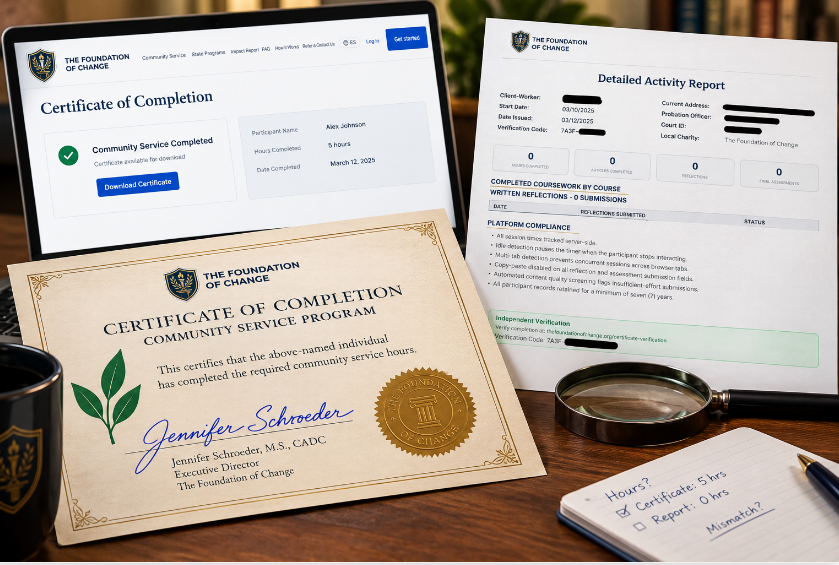
A Detailed Activity Report for one participant reportedly recorded five verified hours.
The same report, however, showed:
0 articles completed
0 reflections
0 final assessments
According to the complaint, the report actually states that the participant completed five verified hours across zero articles and zero final assessments.
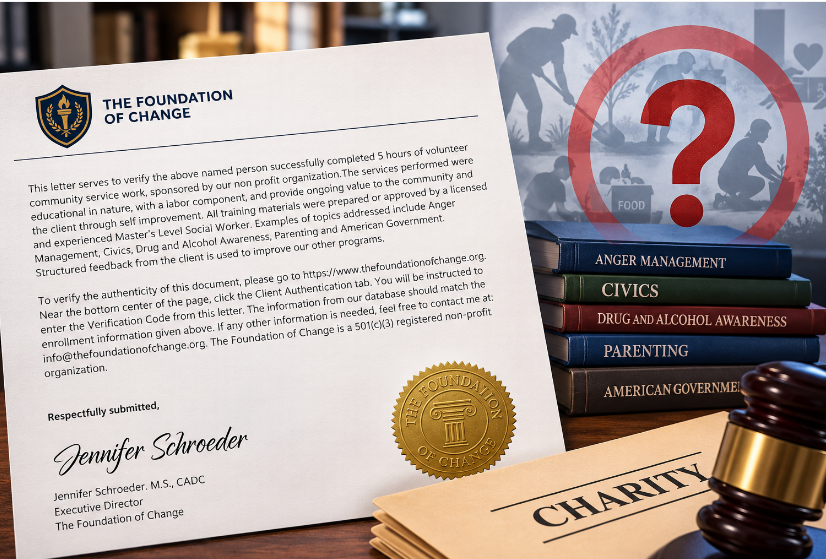
Despite that activity record, the Foundation's corresponding completion statement represented that the participant completed five hours of structured educational community service.
The statement reportedly described a labor component requiring written reflections.
A separate hour log likewise recorded five hours of completed service.
The records therefore appear to establish that the Foundation's system verified time.
What is much less clear is how the records verified the work supposedly performed during that time.
The Foundation Makes Strong Verification Claims
The distinction matters because The Foundation of Change makes specific representations about how its verification system works.
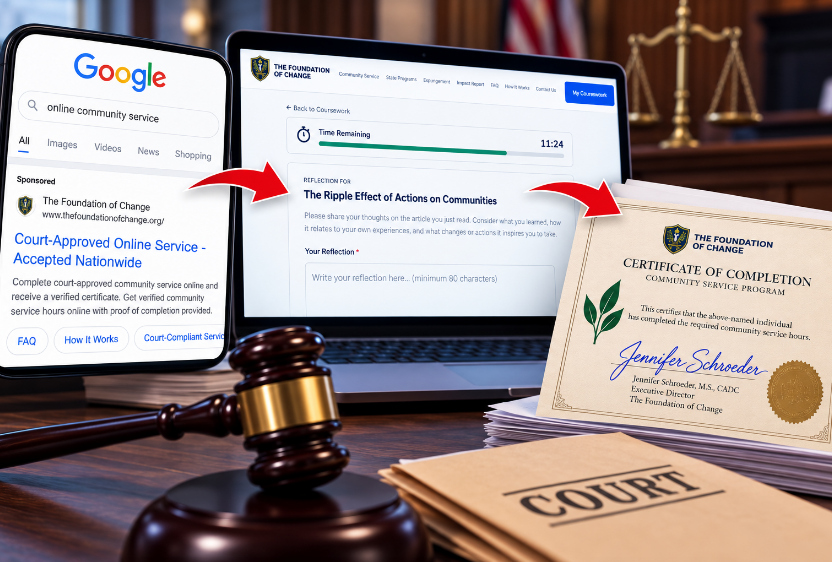
According to preserved materials identified in the complaint, the organization says active participation is mandatory and represents that its timer pauses when a browser is minimized or a participant changes windows.
It also describes a ten-minute AFK timeout, restrictions on concurrent coursework, daily limits and reflection boxes that remain locked until required reading time has passed.
The apparent purpose of those safeguards is straightforward: to prevent someone from receiving community-service credit merely because time passed while a webpage remained open.
But that is precisely where other evidence submitted with the complaint becomes important.
A Recorded Test Challenges the Verification Claims
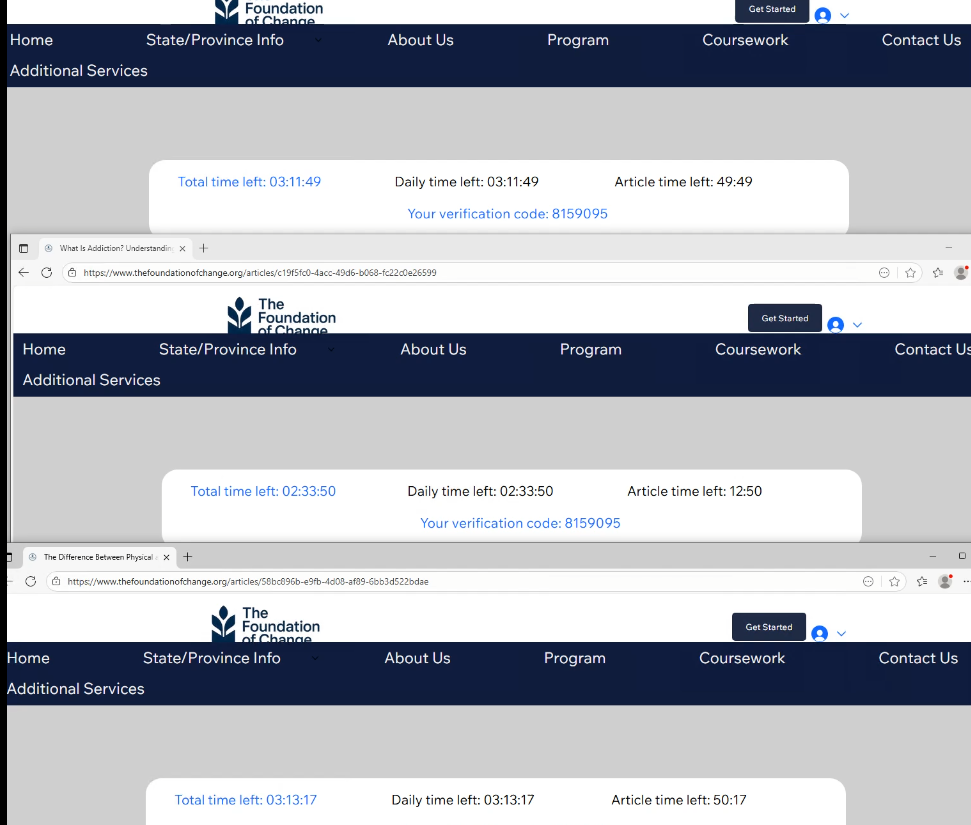
The complaint identifies a continuous screen recording of an ordinary participant using the Foundation's platform.
View this video from 2026 showing that you can earn time with The Foundation of Change without having to do ANYTHING...
And here is a youtube video posted in 2025 that touts that you don't have to do ANY work:
According to the complaint, the recording was made without modifying the website's code or bypassing its controls.
It allegedly demonstrates that an ordinary account could load the relevant webpage and allow the timer to continue accruing time toward a community-service requirement without performing substantive charitable work.
That does not establish that every participant used the system passively.
It does, however, raise a serious question about what the system's “verified hours” actually establish if the timer can accrue credit without the activity the Foundation says its safeguards require.
Another Participant's Records Raise a Different Problem
A second participant's records add another layer to the verification question.
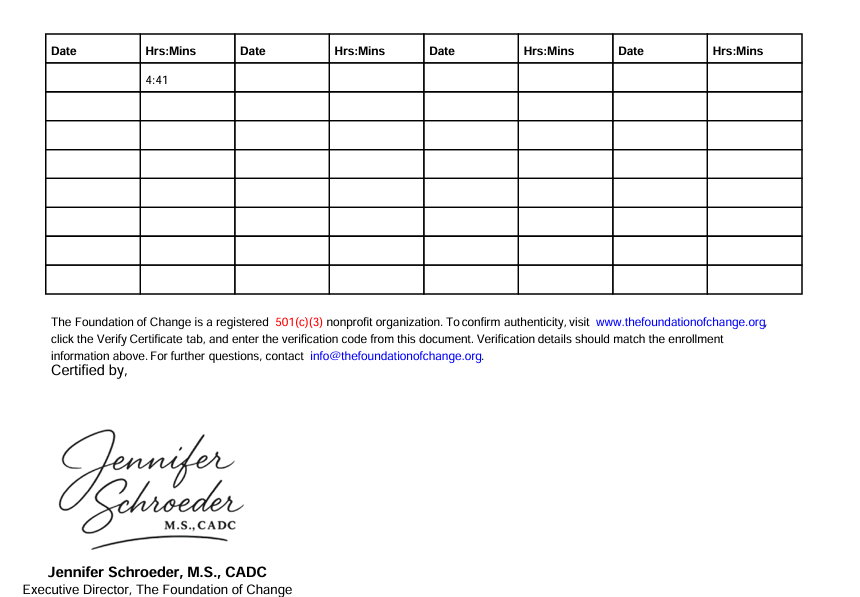
According to the complaint, two service logs associated with the same participant identity, date, court identifier and verification code contained dramatically different time totals.
One reportedly showed 4 hours and 41 minutes.
The other showed 2 minutes.
A separate completion statement represented that the participant completed five hours of volunteer community-service work.
Those records raise a straightforward question about what a court or probation officer is actually confirming when using the Foundation's verification system.
A verification code may confirm that a record exists in the Foundation's database.
That is not necessarily the same thing as independently confirming that the participant performed the work described by the record.
Verified Time Is Not Necessarily Verified Service
This distinction is central to understanding the controversy surrounding The Foundation of Change.
A computer can accurately measure five hours of elapsed time.
A database can faithfully store those five hours.
A verification page can accurately retrieve the database record.
And a certificate generator can correctly place “5 hours” onto a document.
Every technological step in that process could function exactly as programmed while leaving unanswered the most important question:
What did the participant actually do for five hours?
That is why the activity report showing five verified hours alongside zero articles, zero reflections and zero final assessments is so significant.
It provides a glimpse behind the certificate.
Courts Are Being Asked to Trust the Verification
The Foundation's materials are specifically directed toward institutions that need reliable proof of service.
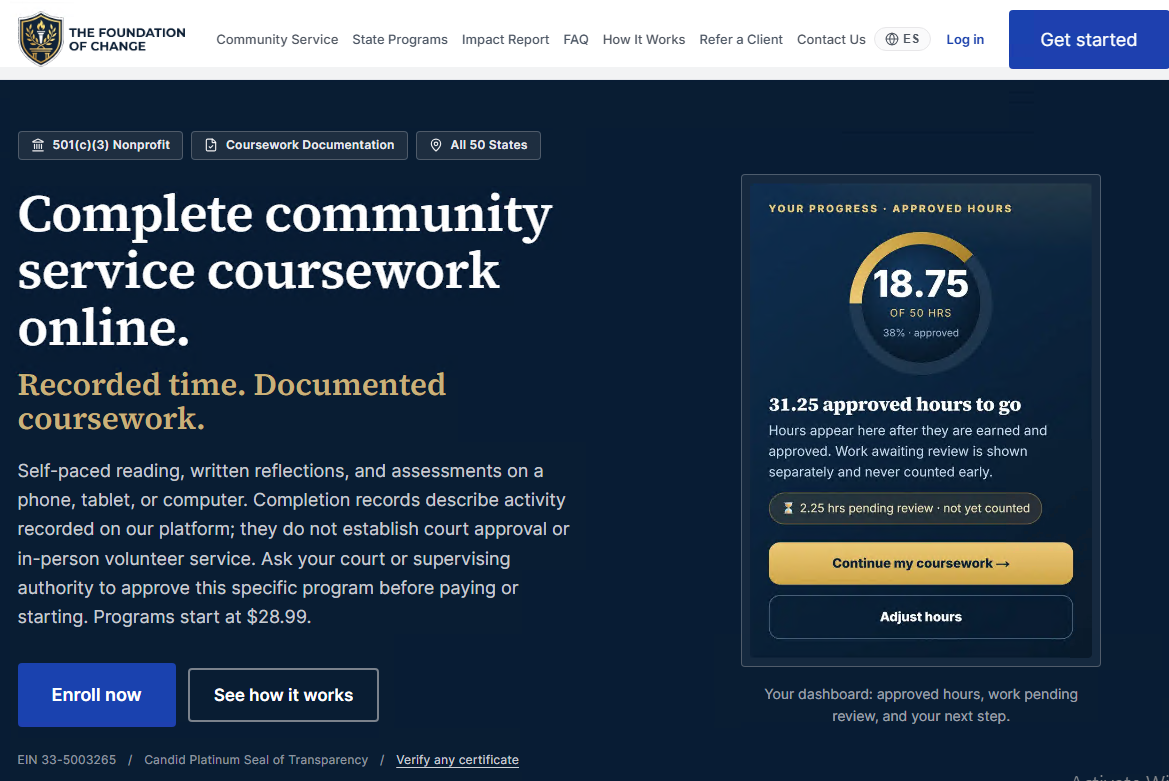
According to the complaint, its materials tell judges, courts and probation officers that the program provides verifiable service hours, court-ready documentation and independent verification.
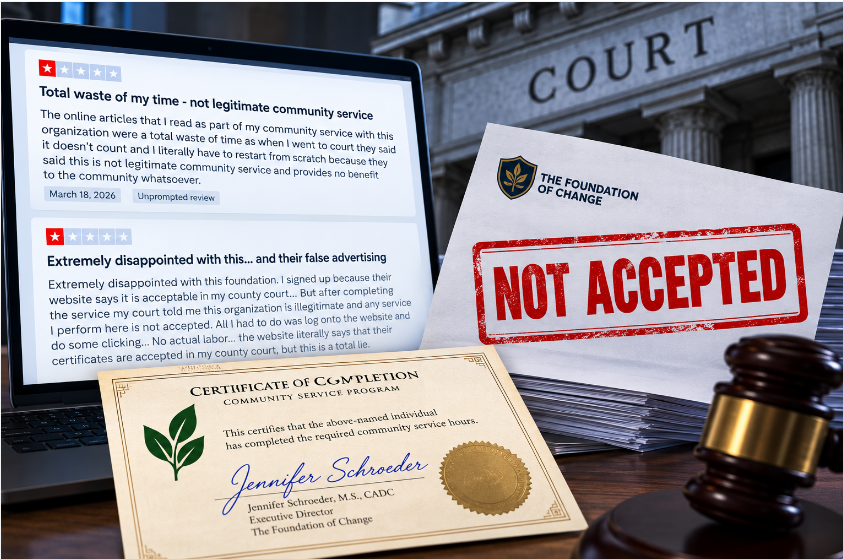
The Foundation has also advertised “Court-Approved Online Service” and “Court-Approved Service Hours.”
That makes the meaning of the word “verified” particularly important.
A court receiving a document representing five verified community-service hours may reasonably want to know more than whether the Foundation's computer recorded five hours.
It may want to know what service occurred during those hours, what activity records support it and who determined that the activity qualified as community service.
The participant records described in the complaint do not provide reassuring answers to those questions.
They instead reveal the central distinction regulators may ultimately need to examine:
The Foundation's records may verify that hours accumulated in its system. Whether those records verify that community service was actually performed is a very different question.