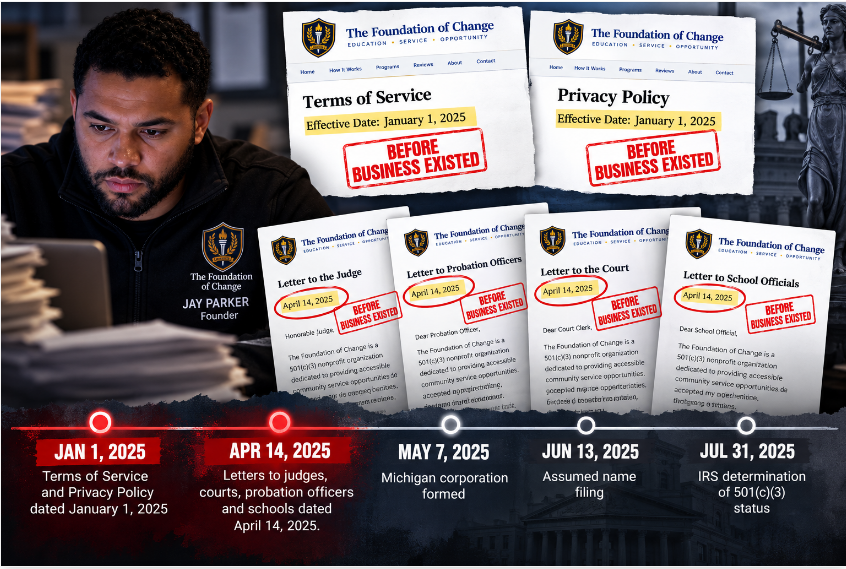
 The Foundation of Change went from a newly incorporated Michigan nonprofit to a federally recognized public charity in a matter of months.
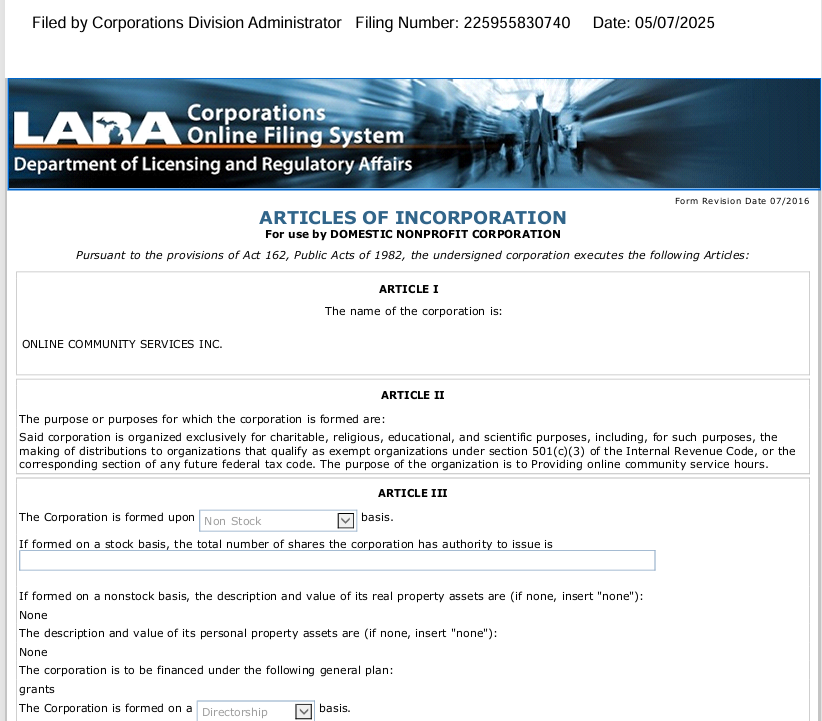
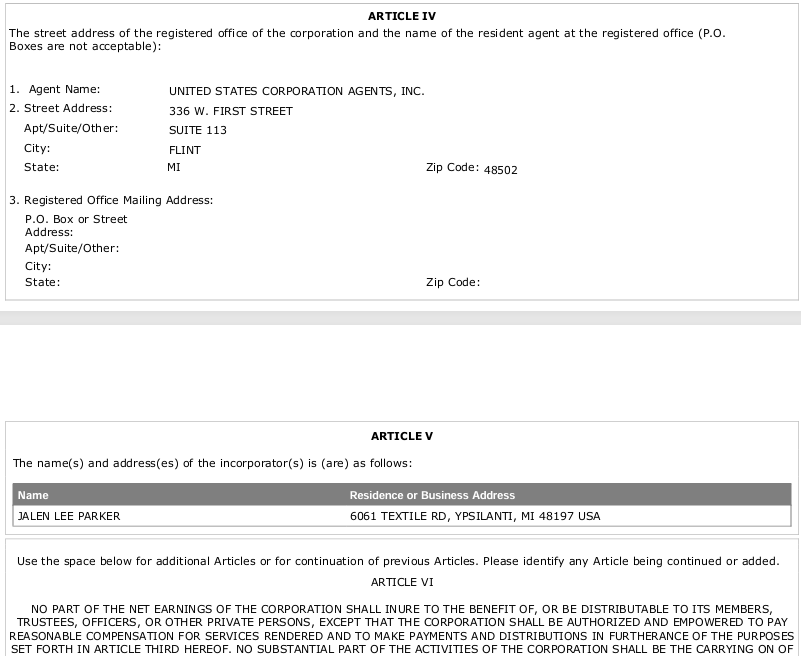
According to corporate records included in a regulatory complaint, Online Community Services Inc. was incorporated in Michigan on May 7, 2025. Jalen Lee Parker signed the articles as incorporator, and the organization's stated purpose was “Providing online community service hours.”
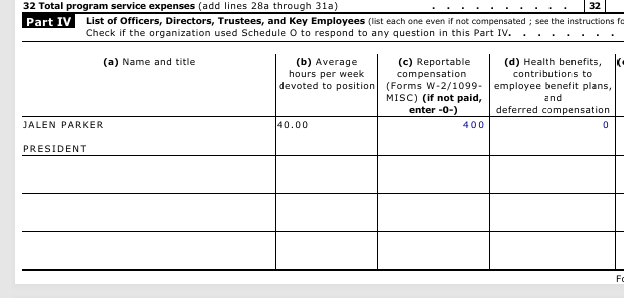
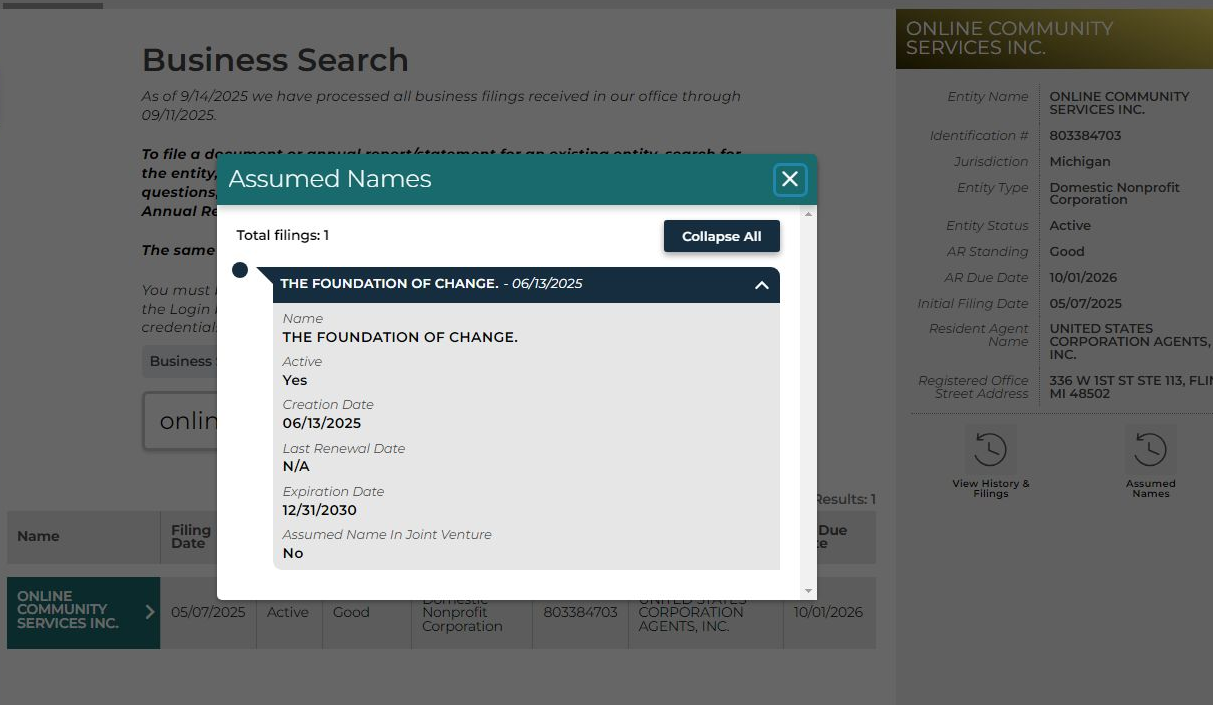
On June 13, the corporation registered the assumed name The Foundation of Change. Its corporate name and stated charitable purposes were subsequently amended.
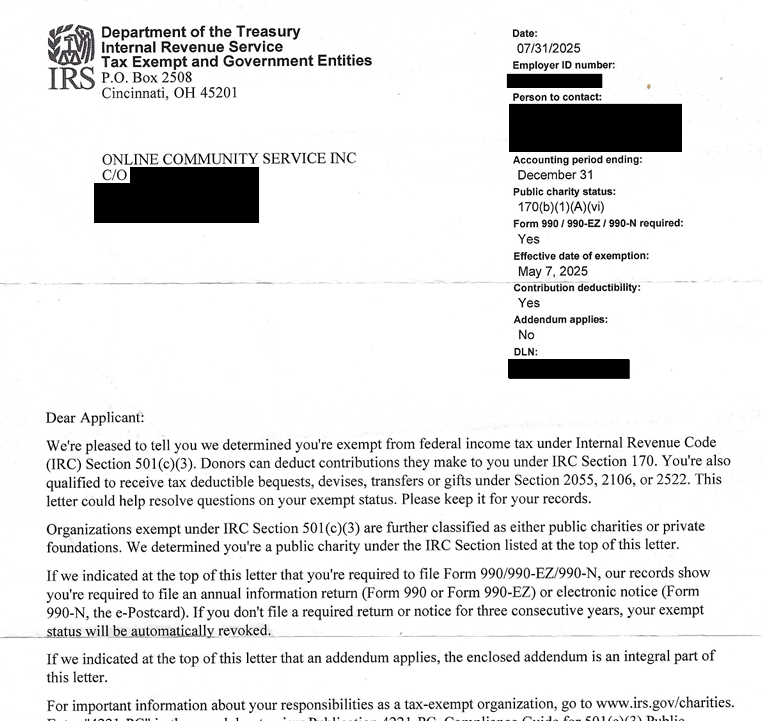
Then, on July 31, 2025, the IRS issued a determination letter recognizing the organization as tax-exempt under Section 501(c)(3), effective back to its May 7 incorporation date. The IRS classified it as a public charity.
But the records assembled in the complaint raise a separate question about what happened after the nonprofit was created:
Who was actually governing it?
The Complaint Describes One-Person Control
The regulatory complaint says the corporate records indicate an apparent one-person control structure during the organization's early operation.
It identifies Parker not only as the incorporator but later as president and alleges that the Foundation operated for an extended initial period with Parker as its sole director.
That matters because the complaint points to Michigan's Nonprofit Corporation Act, which generally requires a nonprofit board to have three or more directors, subject to specified exceptions. The complaint states that nothing in the corporate records supplied with it established that this public charity qualified for the exceptions it identified.
That is the complaint's legal contention, not a judicial determination that the Foundation violated Michigan law.
But the underlying governance question is concrete and capable of being answered from corporate records: Who were the directors, and when did each begin serving?
At the Same Time, the Organization Was Charging for Access to Community-Service Hours
The governance issue becomes more significant when viewed alongside the operation Parker was overseeing.
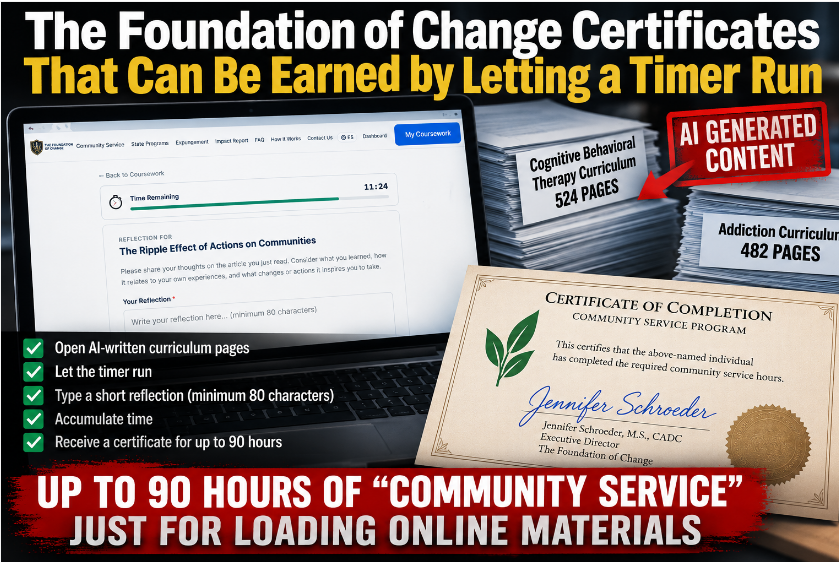
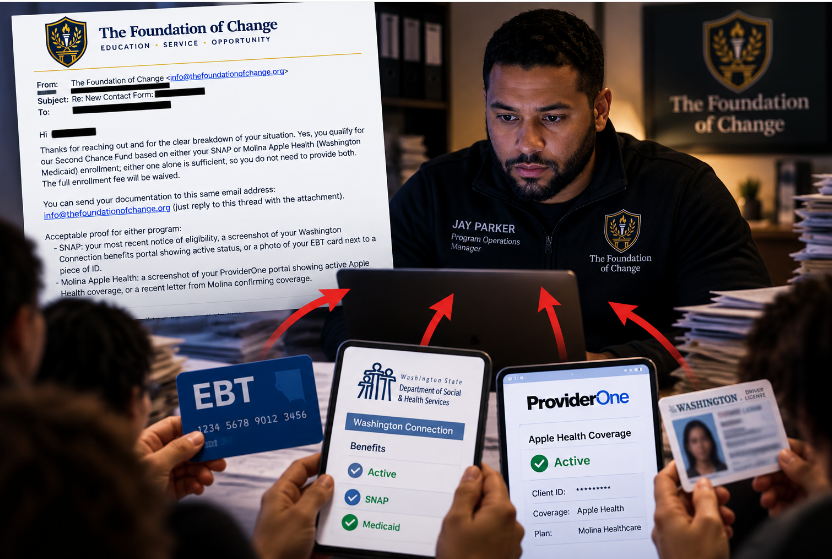
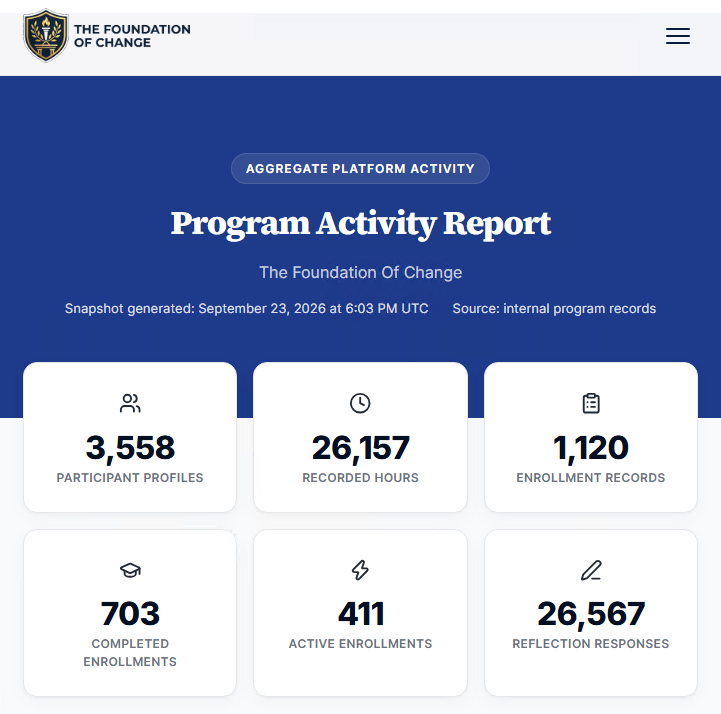
The complaint characterizes the Foundation's program as a straightforward fee-based transaction: a person needing community-service hours selects the number required, uses the online platform, pays the applicable fee and receives documentation representing that the hours were completed and verified.
The Foundation itself describes the payments differently, emphasizing the costs of operating its program and infrastructure.
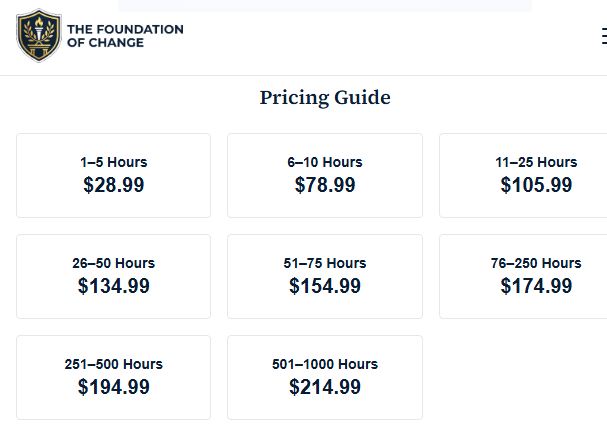
But the pricing schedule preserved with the complaint ties the applicable fee to ranges of community-service hours.
The documented tiers run from $28.99 for 1–5 hours through $214.99 for 501–1,000 hours.
The organization says those fees support functions such as server infrastructure, verified time tracking, anti-fraud systems, certificate generation and its independent verification portal.
Charging program fees does not, by itself, make a nonprofit operation improper. Tax-exempt organizations can charge for services.
The question raised by the complaint is where the resulting revenue went, who controlled those decisions and whether the organization was operated for its exempt purposes rather than for the private benefit of an insider.
The Corporate Documents Contain an Important Restriction
The Foundation's original articles are relevant to that question.
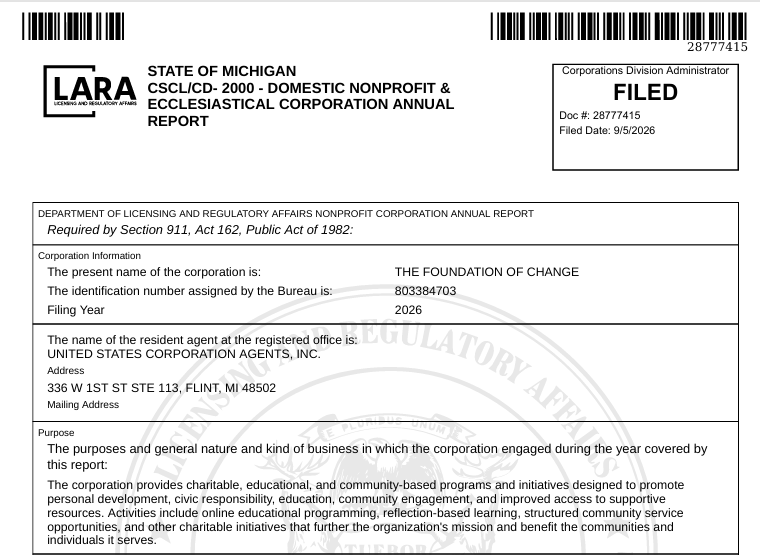
According to the complaint, they expressly prohibit the organization's net earnings from being distributed to members, trustees, officers or other private persons, except for reasonable compensation for actual services and payments furthering the organization's exempt purposes.
A nonprofit founder can be paid reasonable compensation for legitimate work.
Nor does the material reviewed by Activist Legal establish, by itself, how much Parker received or whether any particular payment was improper.
Those are precisely the financial questions the complaint asks regulators to investigate.
The Certificates Made the Operation More Than an Educational Website
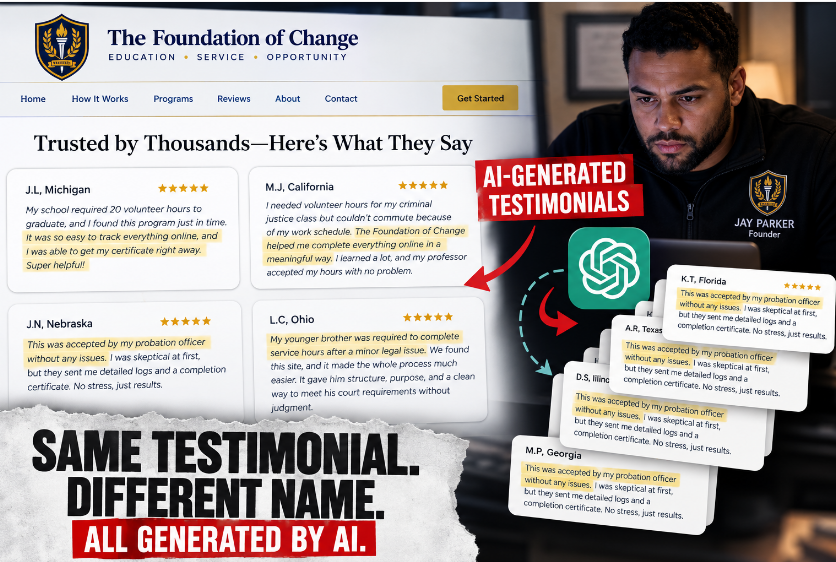
The Foundation wasn't simply charging people to read educational material.
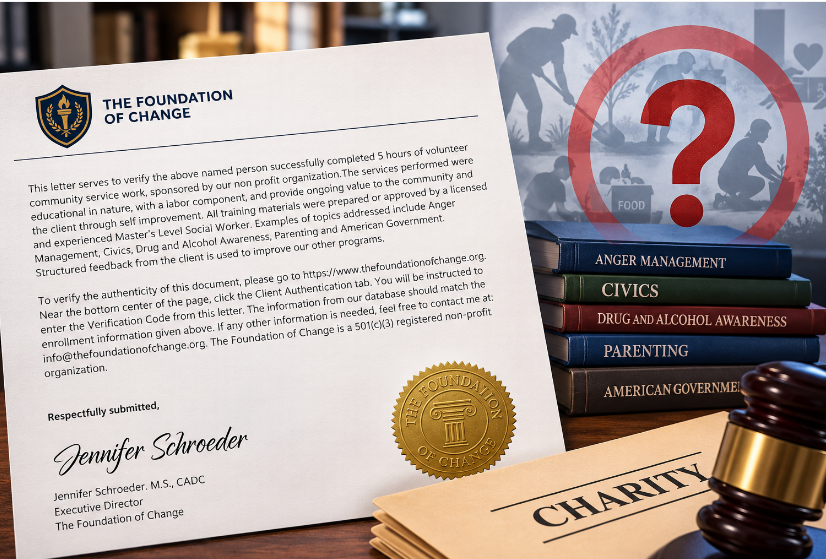
Its platform produced documentation intended to verify completed community-service hours.
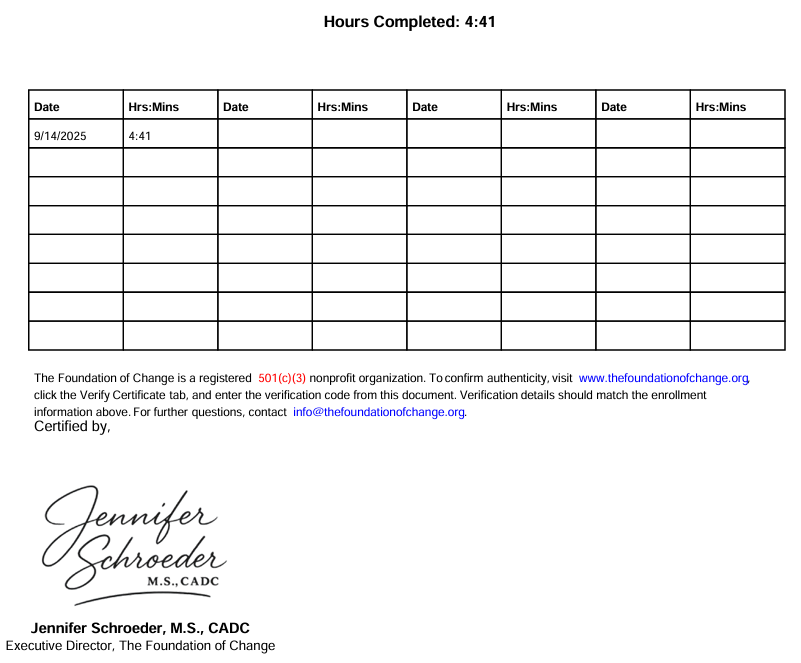
The complaint identifies records associated with hundreds of participant accounts and issued certificates. Those records reportedly contain the participants' hour totals, amounts paid, certificate verification numbers and issuance dates.
The same complaint points to a participant whose Detailed Activity Report records five verified hours despite showing zero articles completed, zero reflections and zero final assessments.
The corresponding documentation nevertheless represented five hours of structured educational community service and described a labor component involving written reflections.
Those records make governance more than an abstract corporate-formality issue.
Someone had authority over a nonprofit collecting participant fees and producing documents representing that court-related community-service obligations had been completed.
Financial Records Could Show What Happened to the Money
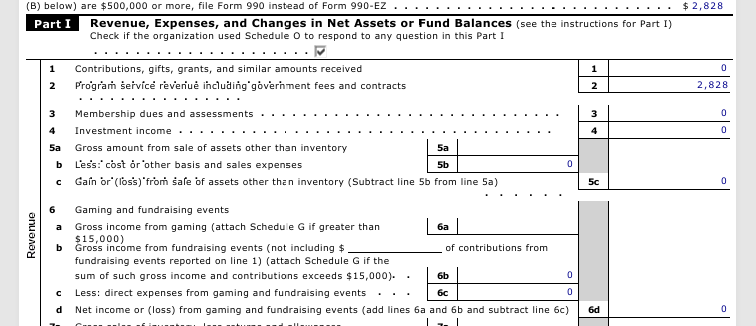
The complaint asks regulators to examine the Foundation's governance records, bank accounts, payment processing records, compensation and transfers involving insiders.
That examination could answer questions the public-facing website cannot.
How much money did the program collect?
Who established its pricing?
Who controlled its bank accounts?
What compensation did Parker receive?
Were there other directors exercising independent oversight?
When were additional directors appointed?
Were transactions involving insiders reviewed and approved by disinterested board members?
The source materials reviewed here do not answer all of those questions. They instead provide the basis for asking them.
The complaint specifically requests a full financial and governance examination and investigation of possible insider transactions and private benefit.
A Public Charity Requires More Than a Corporate Label
The Foundation of Change did obtain IRS recognition as a Section 501(c)(3) public charity. That fact should not be obscured.
But federal recognition at formation does not resolve how an organization was subsequently governed, how its revenue was used or whether its operations consistently furthered its exempt purposes.
Those questions depend on what actually happened.
Here, the timeline makes them particularly worth examining.
A nonprofit was incorporated in May 2025 with the stated purpose of providing online community-service hours.
Within weeks it was operating under The Foundation of Change name.
By July, it had received federal tax-exempt recognition.
Its online operation then collected fees connected to participants' required hours and generated documentation representing completed community service.
And according to the regulatory complaint, the organization's early corporate records reflect an apparent one-person governance structure that warrants investigation.
Whether that structure violated nonprofit law, whether charitable funds improperly benefited an insider and whether the organization maintained adequate independent governance are questions for regulators to determine from the complete records.
But those records should make one thing relatively easy to establish:
Who controlled the charity, who controlled the money, and who was overseeing the person making those decisions?