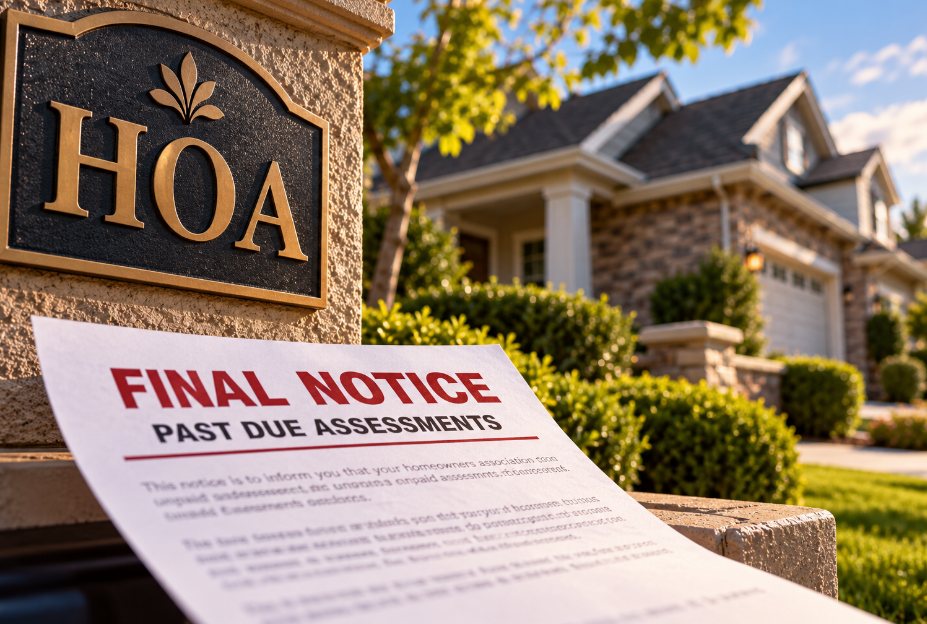

From inaccurate mortgage balances and defective foreclosure notices to improperly handled loan modifications, errors within the foreclosure system can have devastating consequences. But when a homeowner loses a property through an unlawful process, determining who is responsible—and what remedies remain available—can be remarkably complicated.
A homeowner falls behind on mortgage payments and applies for assistance. The mortgage servicer acknowledges the application and requests additional documents.
The borrower provides the requested information and continues communicating with the company.
Then, despite the ongoing review, a foreclosure sale takes place.
In another case, a homeowner discovers that payments were incorrectly credited, causing the mortgage company to report a delinquency greater than the amount actually owed.
Elsewhere, a property is sold after a required notice was sent to an outdated address, raising questions about whether the foreclosure complied with state law.
These examples illustrate different ways a foreclosure can become legally disputed.
Not every servicing error makes a foreclosure unlawful. Not every procedural defect invalidates a completed sale. And not every homeowner who loses a property has a viable wrongful foreclosure claim.
But when a foreclosure violates applicable law, contractual requirements, or legally enforceable duties, the consequences can extend far beyond an ordinary financial dispute.
A wrongful foreclosure can involve the loss of a home, accumulated equity, possession of property, and years of financial investment.
The central question becomes whether the legal system provides an effective remedy—and which participant in the foreclosure process may be held accountable.
What Is Wrongful Foreclosure?
Wrongful foreclosure is a term used to describe foreclosure activity that allegedly violates applicable legal requirements.
It is not a single, uniform federal cause of action.
The elements of a wrongful foreclosure claim depend on state law, the particular foreclosure procedure, and the legal theory asserted.
Potential grounds for challenging foreclosure may include:
Failure to comply with required statutory notices or waiting periods.
Foreclosure initiated by a party lacking the legally required authority.
Material errors in payment accounting or the amount claimed to be owed.
Violations of applicable mortgage servicing regulations.
Foreclosure activity conducted despite a legally effective bankruptcy stay or court order.
Failure to comply with contractual conditions governing foreclosure.
Other conduct that violates an enforceable duty owed to the homeowner.
The existence of an error does not automatically establish liability.
Courts may consider whether the defect was material, whether the homeowner suffered legally recognized harm, whether the claim was brought at the appropriate time, and whether additional elements must be established.
The requirements can also differ depending on whether the homeowner seeks to stop a pending sale, invalidate a completed sale, or recover monetary damages.
That distinction is fundamental.
When Mortgage Payment Records Are Wrong
Mortgage servicing depends on accurate financial records.
A servicer must account for payments, interest, escrow charges, fees, advances, and other amounts associated with the loan.
When those records contain material errors, the consequences can be serious.
A payment may be incorrectly applied, an authorized payment arrangement may not be reflected in the account, or an improper charge may increase the amount demanded.
In some circumstances, a servicing error can cause a loan to appear delinquent when the borrower disputes that a default exists.
Federal mortgage servicing regulations establish procedures for certain borrower notices of error.
Under 12 CFR § 1024.35, covered servicers generally must acknowledge qualifying written notices and investigate specified servicing errors within applicable deadlines, subject to exceptions.
The regulation identifies several categories of errors, including certain failures involving payment crediting, fees, foreclosure activity, and the provision of accurate information.
These procedures can provide a formal mechanism for identifying and correcting servicing problems.
However, submitting a notice of error does not automatically stop a foreclosure sale.
The borrower's available protections depend on the nature of the error, the applicable regulations, and other governing law.
This makes the accuracy of servicing records an essential component of foreclosure accountability.
Foreclosure Notices Are More Than Administrative Paperwork
Foreclosure laws frequently require notices before a property can be sold.
Depending on the jurisdiction, those notices may inform the borrower of the default, the amount required to cure it, the intention to accelerate the debt, or the date and location of a foreclosure sale.
Notice requirements serve an important purpose.
They provide homeowners with information needed to understand the claimed default and consider available responses.
In nonjudicial foreclosure states, where a court may not review the case before a sale, compliance with statutory notice requirements can be particularly significant.
But the legal consequences of defective notice vary.
A court may distinguish between a technical defect that caused no legally significant prejudice and a material violation affecting the homeowner's rights.
State law may also establish presumptions concerning properly conducted foreclosure sales or protections for certain purchasers.
As a result, challenging a completed sale can be more complicated than demonstrating that a document contained an error.
The question is whether the defect provides a legally recognized basis for the relief requested.
When Foreclosure Continues During Loss Mitigation
One of the most consequential areas of foreclosure law concerns borrowers seeking assistance while foreclosure activity is underway.
Mortgage servicers may evaluate applications for loan modifications, repayment plans, forbearance, and other alternatives.
For many covered residential mortgage loans, federal Regulation X establishes procedures governing loss mitigation reviews and restricts certain foreclosure activities.
Under 12 CFR § 1024.41, a covered servicer generally cannot make the first foreclosure notice or filing until the borrower is more than 120 days delinquent, subject to specified exceptions.
Additional restrictions can apply when a borrower submits a complete loss mitigation application within the timeframes established by the regulation.
For example, when a complete application is received more than 37 days before a scheduled foreclosure sale, the servicer generally must comply with applicable evaluation and foreclosure restrictions.
These protections are designed to prevent certain situations in which foreclosure advances while a borrower remains entitled to review for available assistance.
But the regulations do not guarantee approval of a loan modification.
Nor do they prohibit every foreclosure-related activity whenever an assistance application is pending.
Whether a violation occurred depends on the completeness and timing of the application, the foreclosure stage, and the specific conduct involved.
When a servicer violates applicable federal servicing requirements, the borrower may have remedies under the Real Estate Settlement Procedures Act, subject to statutory conditions and limitations.
The Role of Foreclosure Attorneys
Foreclosure attorneys perform legally significant work on behalf of lenders, mortgage servicers, trustees, and other authorized parties.
In judicial foreclosure states, attorneys may file lawsuits, submit evidence, seek judgments, and represent creditors in contested proceedings.
In nonjudicial foreclosure states, attorneys may advise clients, prepare documents, coordinate notices, or perform other authorized functions.
Attorneys are subject to applicable professional conduct rules and legal obligations.
They cannot disregard court orders, knowingly submit false evidence, or engage in conduct prohibited by law.
However, the mere fact that an attorney represented a lender in a foreclosure does not establish liability for the lender's underlying conduct.
Whether an attorney may be held responsible to a homeowner depends on the specific acts involved, applicable law, professional duties, and the elements of any asserted claim.
In some circumstances, debt collection laws may also apply to particular foreclosure-related conduct.
The scope of those laws can depend on whether the activity constitutes debt collection, enforcement of a security interest, or both.
These distinctions matter because foreclosure litigation frequently involves multiple parties with different legal responsibilities.
Can a Foreclosure Trustee Be Held Responsible?
Nonjudicial foreclosure often involves a trustee authorized to carry out specified procedures under a deed of trust and applicable state law.
The trustee may record notices, provide required communications, conduct the auction, and execute documents transferring title.
But a trustee is not necessarily a judge or independent adjudicator of disputes concerning the loan.
Its legal duties vary by jurisdiction.
Some states provide qualified privileges, statutory protections, or specific procedures affecting claims against foreclosure trustees.
For example, California law establishes certain protections and procedures governing trustees acting under deeds of trust.
Those provisions do not authorize unlawful conduct, but they can affect the legal analysis of a claim.
A homeowner alleging trustee misconduct must therefore identify the particular duty involved and the conduct that allegedly violated it.
The trustee's participation in a foreclosure does not automatically make it responsible for every servicing decision made by the mortgage company.
At the same time, the trustee's own statutory obligations cannot be disregarded merely because another party directed the foreclosure.
The Problem of Multiple Responsible Parties
Modern mortgage foreclosure frequently involves a chain of organizations.
The loan owner may be different from the servicer.
The servicer may retain a national default coordinator.
The coordinator or servicer may work with local foreclosure counsel.
A trustee may conduct the sale.
Separate vendors may provide valuations, property inspections, document processing, or other services.
This structure can make it difficult for homeowners to determine which organization is responsible for a disputed action.
Consider a situation in which a servicer approves a foreclosure postponement but the scheduled sale nevertheless proceeds.
The legal analysis may involve communications between the servicer and its foreclosure representatives, the instructions provided to the trustee, and whether applicable law required the sale to be postponed.
Responsibility cannot necessarily be determined simply by identifying which company sent the last notice.
Instead, it may require examining the obligations and conduct of each participant.
The existence of a nationwide foreclosure network does not eliminate legal accountability, but it can make identifying the responsible party more complicated.
Can a Homeowner Stop a Foreclosure Before the Sale?
A homeowner who believes a foreclosure is unlawful may have options for seeking relief before the property is sold.
Depending on the circumstances, those options can include challenging the claimed default, invoking applicable servicing procedures, pursuing loss mitigation, or seeking judicial intervention.
A homeowner may ask a court to issue a temporary restraining order or preliminary injunction when the legal requirements for such relief are satisfied.
These remedies can sometimes prevent a sale while a dispute is considered.
But obtaining an injunction is not automatic.
Courts apply specific standards that may involve the merits of the claim, the likelihood of irreparable harm, the balance of equities, and other factors.
Some jurisdictions impose additional procedural requirements.
A borrower may also face significant time constraints when a foreclosure sale has already been scheduled.
Filing a complaint, disputing a debt, or contacting a government agency should not be assumed to automatically postpone a foreclosure.
Unless an applicable law, binding agreement, court order, or other legally effective restriction prevents the sale, the process may continue.
What Happens After a Wrongful Foreclosure Sale?
Once a foreclosure sale has been completed, the legal situation may become substantially more complicated.
The property may have been purchased by a third party.
A trustee's deed or other transfer document may have been recorded.
The purchaser may seek possession.
State law may provide presumptions concerning the validity of the sale or protections for certain purchasers.
In some circumstances, a homeowner may seek to set aside the foreclosure sale.
Such relief generally requires satisfying state-specific legal standards.
Other claims may seek monetary damages for legally recognized losses.
The availability of those remedies depends on the underlying violation, the status of the property, the rights of purchasers, and applicable law.
A completed foreclosure does not automatically eliminate every potential claim.
But neither does proof of a procedural defect necessarily restore ownership.
The distinction between preventing a foreclosure and challenging one after completion can be critical.
What Damages Can Be Recovered?
The financial consequences of a wrongful foreclosure may include lost equity, expenses, or other legally recognized harm.
But recoverable damages depend on the particular cause of action and governing law.
Some claims permit recovery of actual damages caused by the violation.
Others may provide statutory damages, attorney fees, equitable relief, or additional remedies under specified circumstances.
For example, the Real Estate Settlement Procedures Act provides potential civil liability for certain violations of its servicing requirements.
Under 12 U.S.C. § 2605(f), an individual borrower may seek actual damages resulting from a qualifying violation and, where the statutory requirements are established, additional damages for a pattern or practice of noncompliance, subject to the statutory limit.
The statute also provides for reasonable attorney fees and costs in successful actions.
These remedies are not automatic.
The borrower must establish the required legal elements, including any applicable requirements concerning causation and damages.
State-law wrongful foreclosure claims may involve different standards and remedies.
The amount of the mortgage, the value of the property, and the seriousness of the alleged conduct do not independently determine the amount recoverable.
What About the Homeowner's Equity?
Home equity is often one of the largest financial interests at stake in foreclosure.
A homeowner may have spent years making payments while the property's value increased.
If the home is sold through foreclosure, the treatment of sale proceeds depends on applicable law, the secured obligations, lien priorities, and foreclosure expenses.
When the proceeds exceed the amounts legally payable to secured creditors and other entitled parties, a surplus may exist.
State law governs how that surplus is distributed.
But the property's estimated market value is not necessarily the same as the amount obtained at a foreclosure auction.
A home with substantial apparent equity may sell for less than expected.
If the sale was unlawful, the homeowner may seek available remedies, but the calculation of damages depends on the legal claim and relevant evidence.
A homeowner does not automatically recover the property's full market value merely because a foreclosure procedure was defective.
Courts may need to consider the outstanding secured debt, the property's value, the sale proceeds, and the harm legally attributable to the violation.
The Importance of Foreclosure Documentation
Foreclosure disputes frequently turn on records.
Relevant documents may include the promissory note, mortgage or deed of trust, assignments, payment histories, account statements, notices of default, foreclosure sale notices, and communications concerning loss mitigation.
Court filings, bankruptcy records, recorded instruments, and trustee documents may also become important.
These materials can help establish when particular actions occurred and which entities participated.
For example, a borrower disputing whether a complete loss mitigation application was submitted before a deadline may need evidence of the documents provided and the date the servicer received them.
A dispute concerning payment accounting may require transaction records and correspondence explaining how payments were applied.
A challenge involving defective notice may depend on statutory requirements and evidence concerning delivery or recording.
Accurate documentation can therefore be central to determining whether a foreclosure complied with the law.
Federal Oversight of Mortgage Servicers
Mortgage servicing is subject to federal consumer financial protection laws, including provisions of the Real Estate Settlement Procedures Act and the Truth in Lending Act.
The Consumer Financial Protection Bureau has authority to supervise certain mortgage servicers and enforce applicable federal consumer financial laws.
The agency has brought enforcement actions involving mortgage servicing practices, foreclosure-related conduct, and failures to comply with borrower protections.
Federal regulators are not the only authorities involved.
State attorneys general, financial regulators, courts, and professional licensing bodies may also possess jurisdiction over particular conduct.
But filing a regulatory complaint is different from obtaining an injunction or pursuing a private legal claim.
A regulator may investigate practices or seek enforcement remedies without directly reversing an individual foreclosure.
Homeowners must therefore distinguish among administrative complaints, private litigation, and other available remedies.
The Lessons of America's Foreclosure Crisis
The foreclosure crisis that followed the 2007–2008 housing collapse exposed serious weaknesses in mortgage servicing and foreclosure documentation.
Investigations identified concerns involving inaccurate records, improper affidavits, insufficient verification, and other foreclosure-related practices.
In 2012, federal and state authorities announced the National Mortgage Settlement involving five major mortgage servicers.
The settlement addressed alleged servicing and foreclosure abuses and established substantial financial and servicing-related obligations.
The episode demonstrated how problems within large servicing systems could affect borrowers across multiple jurisdictions.
It also showed that foreclosure misconduct was not necessarily confined to a single employee or isolated office.
Systemic failures could arise from inadequate controls, deficient documentation, and insufficient oversight.
Those historical findings do not establish that any particular modern foreclosure provider is engaging in misconduct.
But they remain an important reminder of why accuracy and accountability matter in high-volume mortgage enforcement.
The Difference Between an Unfortunate Foreclosure and an Unlawful One
Foreclosure can be devastating even when every applicable legal requirement has been followed.
A homeowner may experience unemployment, illness, divorce, business failure, or another hardship that makes mortgage payments unaffordable.
A lender may possess a valid security interest and a legally enforceable right to foreclose.
The resulting loss of the property does not, by itself, establish wrongdoing.
A wrongful foreclosure claim requires something more.
There must be an identifiable legal basis for challenging the conduct or seeking relief.
That may involve a statutory violation, breach of an enforceable obligation, improper exercise of foreclosure authority, or another recognized legal theory.
This distinction is essential to a credible examination of the foreclosure industry.
The purpose of legal accountability is not to presume that every foreclosure is improper.
It is to ensure that creditors and their representatives exercise lawful remedies in accordance with the rules governing those remedies.
When the System Fails, Accountability Must Remain Possible
The American foreclosure system serves a legitimate financial function.
Mortgage lending depends in part on the ability of creditors to enforce security interests when borrowers default.
Without enforceable remedies, the risks and costs associated with secured lending would be different.
But the existence of a valid debt does not excuse violations of applicable law.
A mortgage servicer must comply with its servicing obligations.
A foreclosure attorney must observe applicable legal and professional requirements.
A trustee must perform the duties imposed by the governing law.
Other participants may also bear responsibility for their own legally actionable conduct.
The involvement of multiple organizations should not make unlawful actions immune from review.
Nor should the use of automated systems diminish the importance of accurate records and individualized compliance.
The ultimate measure of a foreclosure system is not simply whether creditors can recover property efficiently. It is whether the process remains lawful, accurate, and accountable when the property at stake is someone's home.
When a foreclosure goes wrong, the law must distinguish between ordinary financial hardship and actionable misconduct, identify the parties responsible for any violation, and provide the remedies authorized by the governing legal framework.
That is the final question underlying the entire business of foreclosure: not merely who has the power to take a home, but who is accountable when that power is exercised unlawfully.