
Behind every foreclosure is a network of mortgage servicers, trustees, attorneys, property valuation specialists, and financial institutions. Understanding how that system operates reveals why losing a home is often far more complicated than missing a mortgage payment.
For most Americans, a mortgage foreclosure begins with a relatively simple problem: a homeowner can no longer afford to make the required monthly payments. But what follows is rarely simple.
Behind the notices, payment demands, legal filings, property inspections, and eventual foreclosure sales is an extensive industry devoted to managing troubled mortgage loans and recovering the value of distressed real estate.
This industry encompasses far more than banks and foreclosure attorneys. It includes mortgage servicing companies, independent trustees, property valuation professionals, homeowners associations, collection specialists, and nationwide legal-service networks.
Together, these participants form what is commonly called the mortgage default servicing industry.
Understanding this system requires examining five interconnected areas: nonjudicial foreclosure, loss mitigation, property valuation, homeowners association liens, and nationwide default legal services.
Foreclosure Without Going to Court
Many homeowners assume that a lender must file a lawsuit and obtain a judge's approval before taking their property. In numerous states, however, foreclosure can occur without an ordinary court proceeding.
This process, known as nonjudicial foreclosure, generally relies on a power-of-sale provision contained in a mortgage or deed of trust.
When a borrower defaults, the authorized party can initiate a statutory process involving required notices, waiting periods, and ultimately a public foreclosure sale.
Unlike judicial foreclosure, which proceeds through a court, nonjudicial foreclosure ordinarily allows the sale process to advance without first obtaining a foreclosure judgment.
The Consumer Financial Protection Bureau recognizes both systems and explains that the applicable procedures depend on state law.
Nonjudicial foreclosure can reduce the time and expense associated with recovering collateral. For lenders and mortgage investors, this can make the process more predictable.
For homeowners, however, it creates an important distinction: there may be no automatic courtroom hearing before the property is sold.
Borrowers may have legal grounds to challenge a foreclosure, but they sometimes must affirmatively initiate court proceedings to raise those objections.
The precise rights, notices, and opportunities to stop a sale depend on the state, the loan, and the circumstances of the default.
Loss Mitigation: The Effort to Avoid Foreclosure
Foreclosure is not necessarily the first or preferred outcome when a mortgage becomes delinquent.
Before a property is sold, mortgage servicers may evaluate whether the borrower qualifies for an alternative arrangement. This process is called loss mitigation.
Loss mitigation can include repayment plans, temporary forbearance, loan modifications, short sales, and other arrangements intended to address the delinquency.
A loan modification might change the interest rate, extend the repayment period, or otherwise restructure the loan. A repayment plan may allow a borrower to catch up on missed payments over time.
These arrangements can benefit both sides. Homeowners may avoid losing their properties, while lenders and investors may avoid foreclosure expenses and potentially recover more of the outstanding debt.
Federal mortgage-servicing regulations establish important procedural protections.
For many covered residential mortgage loans, a servicer generally cannot begin the legal foreclosure process until the borrower is more than 120 days delinquent, subject to specified exceptions.
When a complete loss mitigation application is received more than 37 days before a scheduled foreclosure sale, the servicer generally must evaluate the application within 30 days and comply with applicable restrictions on proceeding with foreclosure.
These requirements are particularly significant because foreclosure and loss mitigation can involve separate departments, outside contractors, and legal representatives.
A homeowner may be communicating with one department about modifying a loan while another part of the servicing operation is preparing foreclosure documents.
The coordination of those activities is therefore more than an administrative concern. It can determine whether a borrower receives the procedural protections required by law.
Property Valuations: Determining What a Distressed Home Is Worth
When a mortgage becomes seriously delinquent, the property's value becomes an important consideration.
A lender or mortgage investor may need to determine whether foreclosure is financially preferable to a loan modification, negotiated sale, or another resolution.
Property valuation services help inform those decisions.
Depending on the circumstances, valuations may involve licensed appraisals, broker price opinions, automated valuation models, inspections, or comparative market analyses.
These methods do not necessarily produce identical results.
A conventional appraisal may assess market value under professional appraisal standards. A broker price opinion may estimate a property's likely selling price based on local market conditions. Automated valuation models use available data and statistical methods to estimate value.
The choice of method depends on the purpose of the valuation and applicable legal or investor requirements.
For distressed properties, the analysis may also consider repair costs, property condition, local market activity, and the likely expenses of selling the home.
The resulting estimate can influence settlement negotiations, short-sale decisions, bidding strategies, and the management of property acquired through foreclosure.
But valuation is not an exact science.
An inaccurate estimate can affect expectations about a property's equity, potential recovery, and the financial consequences of a foreclosure.
That makes the methods used to value distressed properties an important part of the broader mortgage default system.
Homeowners Association Liens: Another Route to Losing Property
Mortgage lenders are not the only parties that may possess enforceable claims against residential property.
In communities governed by homeowners associations, owners may be required to pay regular assessments, special assessments, and other charges authorized by applicable governing documents and law.
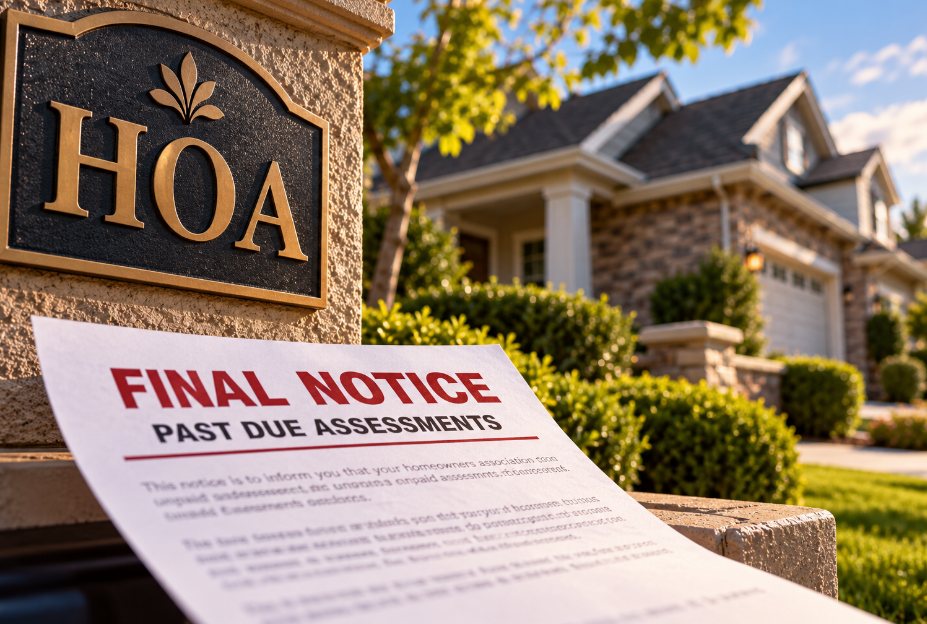
When those obligations remain unpaid, an association may acquire a lien against the property.
Depending on the state and the circumstances, an HOA lien may be enforceable through foreclosure.
This creates a potentially surprising situation: a homeowner who remains current on mortgage payments may nevertheless face a separate foreclosure proceeding because of unpaid association assessments.
The rights of the association, mortgage lender, and homeowner vary substantially among jurisdictions.
Some states impose special notice requirements, minimum delinquency thresholds, opportunities to cure, or other restrictions before an HOA may proceed with foreclosure.
Lien priority can also become a central issue.
In certain jurisdictions, specific portions of association liens may receive priority over otherwise senior interests under applicable statutes. In others, the mortgage lender's lien generally retains priority.
These distinctions can have major consequences for homeowners, lenders, associations, and foreclosure purchasers.
HOA lien enforcement is therefore a specialized area of default-related legal services, one that intersects with mortgage foreclosure but operates under its own legal framework.
Nationwide Default Legal Services: Coordinating Foreclosures Across State Lines
A mortgage investor may own loans secured by properties in dozens of states.
A national servicing company may administer thousands of loans subject to different foreclosure statutes, notice requirements, recording practices, and court procedures.
Yet the legal authority to foreclose on a property generally depends on the laws of the jurisdiction where that property is located.
This creates a substantial coordination challenge.
A foreclosure involving property in California may follow a different procedure from one in Florida, Texas, or New York.
Some jurisdictions primarily use judicial foreclosure, while others permit widespread use of nonjudicial procedures. Timelines, redemption rights, trustee requirements, and borrower protections may also differ.
Nationwide default legal-service networks help coordinate these activities through combinations of centralized case management, local attorneys, trustees, document preparation, compliance systems, and reporting procedures.
The centralized operation may monitor deadlines, manage assignments, coordinate communications, and maintain records across multiple jurisdictions.
Local legal professionals remain responsible for work requiring appropriate jurisdictional authority and professional qualifications.
For mortgage servicers and investors, the objective is to manage large portfolios consistently while complying with differing state requirements.
For homeowners, however, the existence of a national system can make identifying the responsible party more difficult.
The company collecting payments may not own the loan. The law firm sending foreclosure notices may represent a mortgage servicer or investor. A trustee may conduct a sale without being the lender. Another company may handle valuations or property preservation.
These distinctions matter when a borrower disputes an account balance, seeks a modification, challenges a notice, or attempts to stop a scheduled sale.
The System Behind the Foreclosure Notice
The five areas of mortgage default servicing are closely connected.
A delinquent mortgage may first enter loss mitigation review. If the default remains unresolved, the servicer may initiate foreclosure under the applicable state procedure. Property valuations can influence decisions about possible resolutions and recovery strategies. HOA liens may complicate the property's financial and legal status. Throughout the process, legal-service providers and trustees coordinate the work required to move the case forward.
Each participant performs a different function, and each operates within a particular set of contractual, regulatory, and legal obligations.
The system exists because mortgage loans are secured by real property, and creditors have legally recognized rights to enforce those obligations when borrowers default.
At the same time, homeowners have rights that cannot be disregarded simply because a loan is delinquent.
Those rights may include required notices, opportunities to seek assistance, protections against certain servicing practices, and procedures for contesting improper foreclosure activity.
The challenge is ensuring that those protections remain meaningful within an industry increasingly dependent on standardized workflows, specialized contractors, and high-volume processing.
A foreclosure may appear to be a single transaction between a lender and a borrower. In practice, it can involve a chain of decisions made by numerous companies and professionals, sometimes operating in different states.
Understanding who makes those decisions, what authority they possess, and which laws govern their conduct is essential to understanding how America's foreclosure system really works.